
How to Apply for Online Trademark Registration in India
How to Apply for Online Trademark Registration in India: Learn the step-by-step process, required documents, government fees, and timeline to register your trademark online easily.
Our Client







Trade Mark Registration: Complete Guide to Protect Your Brand in India (2026)
Introduction
Every successful business is built around a brand. Whether it is a startup, an online store, a manufacturing company, a consultancy, or a local business, customers identify it through its name, logo, tagline, or symbol. As your business grows, your brand becomes one of your most valuable assets. Without legal protection, someone else may copy your identity, confuse your customers, or even claim rights over a similar brand. This is where Trade Mark Registration becomes essential.
A registered trademark gives you the exclusive legal right to use your brand name, logo, slogan, or other distinctive identity for the goods or services you offer. It helps establish ownership, strengthens customer trust, and provides legal remedies if another person or business attempts to misuse your brand.
In India, trademarks are governed by the Trade Marks Act, 1999, and applications are filed with the Controller General of Patents, Designs and Trade Marks (CGPDTM). Once registered, a trademark remains valid for 10 years and can be renewed indefinitely, allowing businesses to protect their identity for decades.
Whether you are launching a new venture or already operating an established business, registering your trademark is an important step toward building long-term brand value. Businesses that have completed New Company Registration often choose to secure their trademark soon after incorporation to ensure their brand identity is legally protected from the beginning.
This comprehensive guide explains everything you need to know about Trade Mark Registration, including its meaning, eligibility, benefits, types, symbols, legal protection, and the registration process in India.
What is Trade Mark Registration?
Trade Mark Registration is the legal process of obtaining exclusive ownership rights over a unique brand identifier such as a business name, logo, slogan, symbol, label, design, or a combination of these elements. Registration ensures that no other person or organization can legally use an identical or deceptively similar mark for similar goods or services without authorization.
A trademark acts as a unique identifier in the marketplace. It distinguishes your products or services from competitors and enables customers to recognize your brand instantly. Once your trademark is registered, it becomes an intellectual property asset that can be licensed, assigned, franchised, or sold.
Unlike business registration, which establishes a legal entity, trademark registration protects the identity under which your business operates. Even if multiple businesses exist in different industries, trademark protection depends on the specific class of goods or services in which the mark is registered.
For example, a distinctive brand name used for clothing may coexist with another business using the same name for unrelated services, provided there is no likelihood of consumer confusion and the registrations fall under different trademark classes.
Why is Trade Mark Registration Important?
Many entrepreneurs assume that using a business name automatically gives them ownership. In reality, using a brand without registration provides only limited rights, which can be difficult to enforce during legal disputes.
Registering your trademark offers a strong legal foundation that protects your brand from infringement and unauthorized use. As your business expands, your reputation becomes closely associated with your brand identity. Without trademark protection, competitors may attempt to imitate your brand, misleading customers and damaging your reputation.
A registered trademark also increases customer confidence. Consumers often associate registered brands with professionalism, reliability, and authenticity. Investors, distributors, and business partners also view trademark registration as a sign of a well-managed and legally compliant business.
For businesses planning international expansion, trademark registration in India serves as a valuable starting point before seeking protection in other countries through international filing systems.
What Can Be Registered as a Trademark?
Many business owners believe that only a company name can be registered. In reality, Indian trademark law protects a wide variety of distinctive brand elements.
The following can generally be registered as trademarks:
Brand Name
A unique business or product name that distinguishes your offerings from competitors.
Logo
A graphical design, icon, or visual identity representing your business.
Tagline or Slogan
A memorable phrase that customers associate with your brand.
Product Name
The name of a specific product or product line offered by your business.
Label
A combination of text, graphics, colors, and designs appearing on packaging.
Device Mark
A unique artistic representation, symbol, or graphical element.
Sound Mark
Distinctive sounds or jingles that immediately identify a brand.
Shape Mark
The unique shape of a product or packaging that has acquired distinctiveness.
Pattern Mark
A recognizable pattern consistently used to identify products.
Colour Combination
In exceptional cases, a distinctive combination of colors associated exclusively with a particular brand.
Each trademark must be capable of distinguishing your products or services from those of others. Generic, descriptive, or commonly used terms generally face objections during examination unless they have acquired substantial distinctiveness through prolonged commercial use.
Who Can Apply for Trade Mark Registration?
Indian trademark law allows various types of applicants to register trademarks. The applicant should either own the mark or intend to use it in relation to goods or services.
Eligible applicants include:
Individual
Freelancers, creators, professionals, consultants, artists, and entrepreneurs may register trademarks in their personal names.
Sole Proprietorship
The proprietor files the application as the owner of both the business and the trademark.
Partnership Firm
A partnership firm may apply through its authorized partners.
Limited Liability Partnership (LLP)
The trademark is registered in the name of the LLP as a separate legal entity.
Private Limited Company
Companies protect their corporate brands by filing applications under the company’s legal name.
Public Limited Company
Large corporations often maintain multiple trademarks covering different products and services.
Startups
Recognized startups enjoy certain government fee benefits while protecting their intellectual property.
Trusts and Societies
Non-profit organizations may register their names, logos, and symbols to safeguard their identity and reputation.
Businesses operating in regulated sectors frequently secure trademark protection alongside statutory registrations such as MSME Registration to strengthen their legal and commercial credibility.
Essential Features of a Good Trademark
Not every word or logo qualifies for trademark protection. A strong trademark should possess certain characteristics that make it legally registrable and commercially valuable.
Distinctive
The trademark should be unique enough to distinguish your products or services from competitors.
Memorable
Customers should easily recognize and remember your brand.
Non-Descriptive
A trademark should not merely describe the nature, quality, or characteristics of the product.
Easy to Pronounce
Simple and memorable names generally perform better in branding and marketing.
Legally Available
Before filing an application, it is advisable to conduct a comprehensive trademark search to identify any conflicting registrations.
Trade Mark Registration vs Business Registration
Many entrepreneurs confuse company registration with trademark registration. Although both are important, they serve entirely different purposes.
Business Registration | Trade Mark Registration |
Creates a legal business entity | Protects the brand identity |
Governed by corporate laws | Governed by the Trade Marks Act, 1999 |
Allows legal operation of the business | Grants exclusive rights over the brand |
Mandatory for certain business structures | Optional but highly recommended |
Does not prevent others from using a similar brand | Prevents unauthorized use of your brand |
A business can exist without a registered trademark, but its brand remains vulnerable to imitation and legal disputes.
Understanding Trademark Symbols
Many businesses display symbols next to their brand names, but each symbol has a different legal meaning.
™ Symbol
The ™ symbol indicates that a business claims rights over a particular brand name or logo. It can generally be used even before formal registration after filing the trademark application.
® Symbol
The ® symbol may only be used after the trademark has been officially registered by the Trademark Registry. Using this symbol without obtaining registration may attract legal consequences.
℠ Symbol
The ℠ symbol is commonly associated with service marks and is used by businesses offering services rather than physical goods.
Understanding the proper use of these symbols helps businesses communicate the legal status of their intellectual property while building greater trust among customers.
Benefits, Types, Trademark Classes & Documents Required
In the first part of this guide, we discussed what Trade Mark Registration is, why it is important, who can apply, what can be registered, and the difference between trademark registration and business registration.
In this section, we will explore the major benefits of registering a trademark, the different types of trademarks recognized in India, how trademark classes work, how to choose the correct class for your business, and the documents required before filing an application.
Benefits of Trade Mark Registration
A trademark is much more than a legal certificate. It becomes an important business asset that protects your identity, improves customer confidence, and strengthens your position in the market. Whether you operate a startup, a growing enterprise, or an established company, trademark registration offers long-term advantages that support business growth.
Exclusive Legal Ownership
The biggest advantage of Trade Mark Registration is that it grants exclusive legal rights over your brand. Once your trademark is registered, you become the lawful owner of the mark for the goods or services covered under the registered class.
If another business uses an identical or deceptively similar mark, you have the legal right to take action against infringement and protect your brand identity.
Builds Customer Trust
Consumers are more likely to purchase products or services from businesses they recognize. A registered trademark creates confidence because customers know they are dealing with the original brand rather than an imitation.
As your reputation grows, your trademark becomes a symbol of quality and consistency, encouraging repeat customers and long-term loyalty.
Creates a Valuable Business Asset
A trademark is an intellectual property asset that increases the overall value of your business. Over time, your brand may become more valuable than many physical assets owned by the company.
Registered trademarks can be:
- Licensed to other businesses
- Assigned to another owner
- Sold as a valuable asset
- Used during mergers and acquisitions
- Included in franchise agreements
This makes trademark registration an important investment rather than simply a legal formality.
Strong Legal Protection Against Infringement
Without registration, proving ownership of a brand can be difficult. A registered trademark provides official legal evidence that the mark belongs to you.
If someone copies your logo, business name, slogan, or branding, you can seek legal remedies through the appropriate authorities and courts.
Gives Your Brand a Professional Identity
Customers, investors, suppliers, and business partners often view registered brands as more reliable and trustworthy.
Whether you operate online or offline, a registered trademark enhances your professional image and demonstrates that your business values its intellectual property.
Enables the Use of the ® Symbol
After your trademark is officially registered, you are legally entitled to use the ® symbol.
This symbol indicates that your trademark enjoys statutory protection under Indian law and discourages competitors from attempting to copy your brand.
Supports Business Expansion
As businesses expand into new cities, states, or international markets, brand protection becomes increasingly important.
A registered trademark provides a strong foundation for expanding operations, entering franchise partnerships, attracting investors, and applying for trademark protection in other countries through international systems such as the Madrid Protocol.
Businesses planning expansion often complete legal compliances such as obtaining a Digital Signature Certificate before filing various statutory applications and registrations.
Types of Trademarks in India
Indian trademark law recognizes different categories of trademarks based on the nature of the mark and the purpose it serves. Selecting the correct type helps ensure proper legal protection for your brand.
Word Mark
A word mark protects the textual representation of your brand name regardless of the font, style, color, or design used.
For example, if a business registers its brand name as a word mark, the legal protection extends to the name itself rather than its visual appearance.
Word marks generally provide the broadest level of protection because they safeguard the brand name across different styles and formats.
Device Mark (Logo)
A device mark protects the visual representation of your brand, including logos, symbols, icons, artistic designs, and graphical elements.
If your logo has a unique appearance that customers immediately recognize, registering it as a device mark is highly recommended.
Combination Mark
A combination mark protects both the brand name and logo together as they appear in a single design.
While this offers protection for the combined presentation, it does not provide separate protection for the individual word or logo unless they are also registered independently.
Service Mark
A service mark identifies services rather than physical goods.
Industries that commonly register service marks include:
- Legal services
- Education
- Hospitality
- Financial services
- Healthcare
- Information technology
- Business consulting
Product Mark
A product mark is used to distinguish physical goods manufactured or sold by a business.
Examples include:
- Food products
- Clothing
- Cosmetics
- Electronics
- Furniture
- Machinery
Collective Mark
Collective marks are used by associations, organizations, or groups whose members follow specific standards or quality guidelines.
These marks indicate membership in a recognized association.
Certification Mark
Certification marks indicate that a product or service meets particular quality standards established by an authorized certifying organization.
Examples may include certifications related to safety, quality, manufacturing standards, or environmental compliance.
Many businesses that pursue quality standards also obtain ISO Certification to strengthen customer confidence and improve their market reputation.
Shape Mark
A shape mark protects the distinctive three-dimensional shape of a product or its packaging.
The shape must be unique enough for customers to identify the product solely based on its appearance.
Pattern Mark
Pattern marks protect unique surface patterns used consistently on products or packaging.
The pattern should be distinctive and capable of identifying the source of the goods.
Sound Mark
A sound mark protects a distinctive sound associated with a brand.
Many well-known companies use unique jingles or audio signatures that customers instantly recognize.
Understanding Trademark Classes
Trademark registration in India follows the internationally accepted Nice Classification System, which divides goods and services into 45 different classes.
Choosing the correct class is extremely important because trademark protection applies only to the classes in which the application is filed.
The classes are divided into two major categories.
Classes 1 to 34
These cover goods, including:
- Chemicals
- Pharmaceuticals
- Machinery
- Electronics
- Jewellery
- Clothing
- Food products
- Furniture
- Cosmetics
Classes 35 to 45
These cover services, including:
- Advertising
- Business management
- Education
- Entertainment
- Hospitality
- Healthcare
- Legal services
- Financial services
- Information technology
Popular Trademark Classes
Below are some of the most commonly used trademark classes in India.
Trademark Class | Description |
Class 9 | Software, computers, mobile applications, electronics |
Class 25 | Clothing, footwear and apparel |
Class 30 | Tea, coffee, spices and bakery products |
Class 35 | Advertising, marketing, retail and business services |
Class 41 | Education, coaching and entertainment services |
Class 42 | IT services, software development and technology |
Class 43 | Hotels, restaurants and food services |
Class 45 | Legal, security and personal services |
How to Choose the Correct Trademark Class
Selecting the appropriate class is one of the most important steps in the registration process.
A wrong class can lead to unnecessary objections or leave your brand unprotected in your actual line of business.
When choosing a trademark class, consider the following factors.
Identify Your Primary Business Activity
Determine whether your business sells products, provides services, or does both.
Consider Future Expansion
If you plan to expand into additional products or services in the near future, you may need trademark protection in multiple classes.
Review the Nice Classification
Study the official class descriptions carefully before filing the application.
Conduct a Professional Trademark Search
A comprehensive search helps identify similar trademarks within your chosen class and reduces the possibility of future objections.
Seek Professional Guidance
If your business operates across multiple industries, consulting an experienced trademark professional can help you select the most appropriate class or classes.

Documents Required for Trade Mark Registration
The documents required depend on the type of applicant submitting the trademark application.
Individual or Sole Proprietor
- PAN Card
- Aadhaar Card
- Address proof
- Brand name or logo
- Signed authorization, if applicable
Partnership Firm
- Partnership Deed
- PAN of the partnership
- Address proof
- Brand representation
- Authorization documents
LLP
- Certificate of Incorporation
- LLP Agreement
- PAN of the LLP
- Address proof
- Brand logo or brand name
- Authorization letter
Company
- Certificate of Incorporation
- PAN Card of the company
- Address proof
- Board Resolution where required
- Brand representation
- Authorized signatory details
Startup or MSME
Eligible startups and MSMEs may claim concessional government fees by submitting the relevant registration certificates.
Many growing businesses complete MSME Registration before applying for trademark protection to take advantage of available government benefits wherever applicable.
Important Information Before Filing
Before submitting your trademark application, make sure that:
- Your brand name is unique.
- The logo is clear and of high quality.
- The correct trademark class has been selected.
- Applicant details match official documents.
- Supporting documents are complete.
- Similar trademarks have been checked through a proper search.
Careful preparation at this stage significantly improves the chances of smooth registration.
Complete Registration Process, Government Fees, Timeline & Trademark Objection
Registering a trademark involves several legal stages before your brand receives complete statutory protection. Although the process may appear technical, understanding each step helps applicants avoid unnecessary delays and improves the chances of successful registration.
Whether you are an entrepreneur launching a startup, an established company introducing a new brand, or a service provider expanding your business, following the correct procedure is essential.
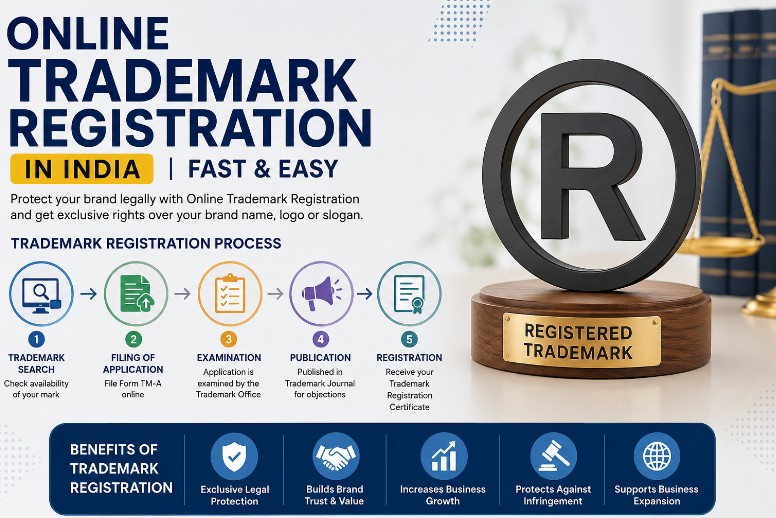
Step 1: Conduct a Trademark Availability Search
The first step in Trade Mark Registration is checking whether your proposed brand already exists.
A trademark search helps identify identical or deceptively similar marks that may lead to objections during examination or opposition by third parties. Conducting a detailed search before filing saves both time and money while reducing the possibility of rejection.
A professional search generally includes:
- Identical word search
- Phonetic similarity search
- Device or logo search
- Class-wise trademark search
- Similar brand analysis
Businesses launching new food products often perform a trademark search before applying for an FSSAI License, ensuring that both their brand identity and regulatory approvals move forward without conflicts.
Step 2: Select the Correct Trademark Class
Once the trademark search is complete, the next step is selecting the appropriate class under the Nice Classification System.
Your trademark receives protection only for the classes in which it is registered. Choosing the wrong class may leave your business exposed to future disputes or require a fresh application.
Some businesses operate in multiple industries and may need protection under more than one trademark class.
Step 3: Prepare the Required Documents
Before filing the application, ensure that all documents are complete and accurate.
Depending on the applicant type, these may include identity proof, address proof, business incorporation documents, authorization letters, and a clear representation of the brand name or logo.
If the trademark application is filed through an authorized professional, the necessary authorization documents should also be properly executed.
Step 4: File Form TM-A
The official application for trademark registration is filed using Form TM-A through the Intellectual Property India online portal.
The application includes important information such as:
- Applicant details
- Brand name or logo
- Trademark class
- Description of goods or services
- User claim, if applicable
- Supporting documents
Once the application is successfully submitted, the Trademark Registry generates an Application Number.
This number can be used to track the progress of the application throughout the registration process.
Step 5: Start Using the ™ Symbol
After filing the application, the applicant can generally begin using the ™ symbol with the brand name.
Using the ™ symbol informs customers and competitors that the applicant claims rights over the mark, even though the registration process is still pending.
However, the ® symbol can only be used after the Trademark Registry grants the registration certificate.
Step 6: Examination by the Trademark Registry
After filing, the Trademark Registry examines the application to determine whether it complies with the provisions of the Trade Marks Act, 1999.
During examination, the Registrar checks several factors, including:
- Distinctiveness of the mark
- Similarity with existing trademarks
- Compliance with legal requirements
- Correct classification
- Descriptive or generic nature of the mark
If everything is satisfactory, the application proceeds to publication.
If any issues are identified, an Examination Report is issued.
Trademark Objection
Receiving a trademark objection does not mean that your application has been rejected.
An objection simply means that the Trademark Examiner requires clarification before allowing the application to proceed.
Some common reasons include:
- Similarity with an existing trademark
- Descriptive brand name
- Lack of distinctiveness
- Incorrect trademark class
- Missing information
- Improper documentation
Applicants usually receive an opportunity to submit a written reply supported by legal arguments and evidence.
If required, the Registrar may schedule a hearing before making the final decision.
Trademark Hearing
When the written response does not fully satisfy the Registrar, a hearing may be scheduled.
During the hearing, the applicant or their authorized representative explains why the trademark deserves registration.
Supporting documents, evidence of prior use, advertisements, invoices, website records, and customer recognition may strengthen the case.
Many organizations complete statutory registrations such as Trust Registration before building a long-term brand identity, making trademark protection an important next step for safeguarding their name and logo.
Step 7: Publication in the Trademark Journal
Once accepted, the trademark is published in the official Trademark Journal.
Publication serves an important legal purpose.
It allows members of the public to review the proposed trademark and raise objections if they believe the registration could affect their existing rights.
Journal publication does not mean the trademark has been registered.
It simply opens the application for public review.
Step 8: Trademark Opposition
After publication, the trademark remains open for opposition for four months.
If no opposition is filed during this period, the application moves toward registration.
If someone files an opposition, both parties are given an opportunity to present their evidence before the Trademark Registry decides the matter.
Trademark opposition is different from trademark objection.
An objection is raised by the Trademark Examiner, whereas an opposition is initiated by a third party claiming that the trademark should not be registered.
Step 9: Registration Certificate
If the application successfully clears examination and opposition stages, the Trademark Registry issues the Registration Certificate.
Once the certificate is granted:
- You become the legal owner of the trademark.
- You may legally use the ® symbol.
- Your trademark receives protection for ten years.
- The registration becomes renewable indefinitely every ten years.
Government Fees for Trade Mark Registration (2026)
The government filing fee depends on the applicant category.
Applicant Type | Government Fee (Per Class) |
Individual, Startup or MSME | ₹4,500 |
Company, LLP or Other Entity | ₹9,000 |
Professional consultation charges, trademark search fees, and legal representation charges may vary depending on the service provider.
Businesses engaged in international trade often secure an Export Import Code alongside trademark registration to establish both their legal identity and global business presence.
Estimated Trademark Registration Timeline
The registration process generally follows this timeline.
Stage | Estimated Time |
Trademark Search | 1 Day |
Filing of Application | 1–2 Days |
Examination by Registry | 3–6 Months |
Journal Publication | 1–3 Months |
Opposition Period | 4 Months |
Registration Certificate | 2–3 Months |
In most cases, the complete process takes approximately 12 to 18 months, although timelines may vary depending on objections, hearings, or opposition proceedings.
How to Check Trademark Application Status
Applicants can monitor the progress of their application through the official Intellectual Property India portal.
The status generally changes through different stages, such as:
- New Application
- Formalities Check Pass
- Sent for Examination
- Objected
- Accepted
- Advertised Before Acceptance
- Opposed
- Registered
Tracking the application regularly helps applicants respond promptly to examination reports or notices issued by the Registry.
Why Accuracy Matters During Filing
Even a small mistake in applicant details, class selection, or supporting documents can delay the registration process.
Businesses that maintain proper compliance records, including registrations like ESI Registration, often find it easier to manage legal documentation during intellectual property filings.
Similarly, organizations working in the social sector frequently protect their identity after completing NGO Darpan Registration, ensuring that their name and logo remain legally secured.
Manufacturers focusing on environmental compliance may also consider EPR Registration as part of their broader regulatory framework while building a protected and trustworthy brand.
Trademark Renewal, Common Mistakes, Trademark vs Copyright
By now, you understand what Trade Mark Registration is, why it is important, the different types of trademarks, required documents, trademark classes, and the complete registration process in India.
In this final section, we will discuss how to maintain your trademark after registration, avoid common mistakes, understand the difference between trademarks, copyrights, and patents, and answer the most frequently asked questions.
Trademark Renewal in India
A registered trademark is not valid forever. Under the Trade Marks Act, 1999, a trademark remains valid for 10 years from the date of registration.
To continue enjoying legal protection, the owner must renew the registration before it expires.
The renewal process is straightforward and helps maintain uninterrupted ownership rights over the brand.
If the trademark is not renewed within the prescribed time, it may be removed from the Register of Trademarks. Although restoration is possible in certain cases, renewing on time is always the better option to avoid unnecessary legal complications.
Timely renewal ensures that your brand remains protected and continues to enjoy exclusive legal rights.
What Happens After Trademark Registration?
Receiving the registration certificate is not the end of the process. Trademark owners should actively protect and manage their intellectual property.
Some important post-registration practices include:
Use the ® Symbol
Once the Trademark Registry issues the registration certificate, you may legally use the ® symbol with your brand.
Using this symbol indicates that your trademark is officially registered under Indian law.
Monitor Similar Applications
Regularly monitoring newly published trademark applications helps identify brands that may be confusingly similar to yours.
Taking timely action against conflicting applications protects your brand identity.
Maintain Consistent Brand Usage
Always use your trademark consistently across:
- Website
- Product packaging
- Marketing materials
- Business documents
- Social media
- Advertisements
Consistency strengthens brand recognition and supports legal enforcement if disputes arise.
Renew the Trademark Every Ten Years
Trademark protection continues only if renewals are completed on time.
Businesses that actively maintain their intellectual property portfolio enjoy long-term legal security and stronger brand value.
Common Mistakes to Avoid During Trade Mark Registration
Many applications face delays or objections because of avoidable errors. Understanding these mistakes can significantly improve your chances of successful registration.
Choosing a Generic Brand Name
Generic or descriptive words often fail to qualify for trademark protection because they do not distinguish one business from another.
A unique and creative brand name generally has a much higher probability of registration.
Filing Under the Wrong Class
Trademark protection is available only for the class in which the application is filed.
Selecting an incorrect class may leave your actual business activities unprotected.
Skipping the Trademark Search
Some applicants directly file their application without checking existing trademarks.
This increases the likelihood of objections and opposition proceedings.
Conducting a comprehensive trademark search before filing is always recommended.
Submitting Incorrect Documents
Incomplete documentation, inconsistent applicant details, or poor-quality logo files may delay the examination process.
Ensuring that all documents are accurate before filing helps avoid unnecessary complications.
Delaying Trademark Registration
Waiting until your business becomes popular can create unnecessary risks.
Another party may file a similar trademark before you, making it difficult to secure exclusive rights later.
Registering your trademark as early as possible is one of the smartest business decisions.
Trade Mark vs Copyright vs Patent
Although trademarks, copyrights, and patents all protect intellectual property, each serves a different purpose.
Feature | Trade Mark | Copyright | Patent |
Protects | Brand name, logo, slogan and business identity | Books, music, artwork, software, photographs and creative content | New inventions, machines, products and industrial processes |
Governing Law | Trade Marks Act, 1999 | Copyright Act, 1957 | Patents Act, 1970 |
Validity | 10 years, renewable indefinitely | Lifetime of the author plus 60 years | 20 years from the filing date |
Primary Purpose | Protects business identity | Protects creative expression | Protects innovation |
Choosing the correct form of intellectual property protection depends on the nature of the asset you want to protect.
Can You Register an International Trademark?
Yes.
Businesses planning to expand beyond India can seek trademark protection in multiple countries through the Madrid Protocol.
Instead of filing separate applications in every country, eligible applicants can apply for international protection through a centralized system.
However, approval depends on the trademark laws of each designated country.
International registration is particularly useful for businesses planning to export products, establish overseas branches, or build a global brand.
Why Professional Assistance Matters
Although applicants can file trademark applications independently, professional guidance often helps avoid costly mistakes.
An experienced trademark consultant can assist with:
- Comprehensive trademark search
- Class selection
- Documentation review
- Application preparation
- Filing before the Trademark Registry
- Examination report replies
- Objection handling
- Opposition proceedings
- Hearing representation
- Post-registration compliance
Professional assistance reduces the likelihood of procedural errors and improves the efficiency of the registration process.
Can I register a trademark without a company?
Yes, individuals and sole proprietors can apply.
Is a trademark valid worldwide?
No, it is valid only in the country of registration.
Can I register my business logo and name together?
Yes, as a combined trademark application.
What if my trademark application is rejected?
You may respond, appeal, or file a fresh application.
Can two businesses have the same trademark?
Only if they operate in different classes without confusion.
Can I sell or transfer my registered trademark?
Yes, trademarks can be assigned or licensed.
How do I check my trademark application status?
Conclusion
A strong brand deserves strong legal protection. Whether you are starting a new venture or expanding an existing business, Trade Mark Registration is one of the most valuable investments you can make for your brand’s future.
Registering a trademark not only grants exclusive ownership rights but also builds customer confidence, strengthens your market position, and protects your business against unauthorized use. It transforms your brand into a valuable intellectual property asset that can support long-term growth, licensing opportunities, and business expansion.
The registration process involves careful planning, selecting the correct trademark class, conducting a comprehensive search, filing the application accurately, and responding promptly to any examination or opposition proceedings. Taking the right approach from the beginning significantly improves the likelihood of successful registration.