
NGO Darpan Registration Online Process in India
NGO Darpan Registration Online Process in India: Learn about documents, eligibility, registration steps, Unique ID, NGO registration, 12A & 80G, benefits and important requirements.
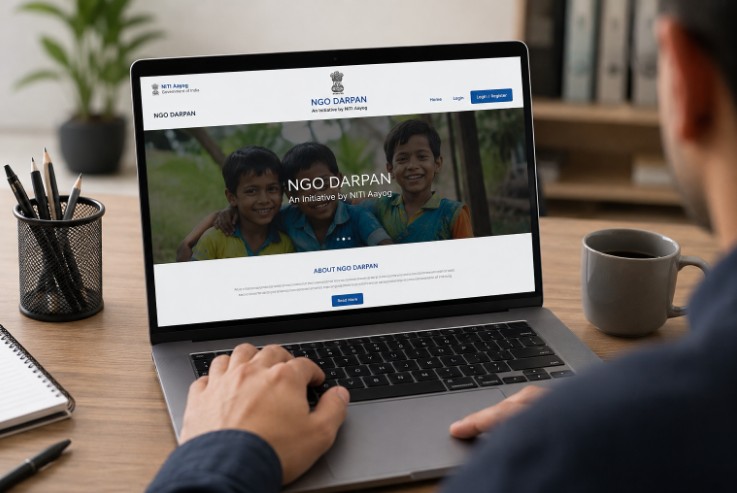
NGO Darpan Registration Online Process in India
Starting an NGO is only the first step toward creating a meaningful social impact. Once an organisation is registered, it may need to complete several formalities to establish its identity, apply for government-related opportunities, receive eligible grants, and build trust among donors and stakeholders. This is where NGO Darpan Registration becomes important.
NGO Darpan is an online platform developed by NITI Aayog for maintaining information about voluntary organisations and NGOs in India. An organisation can create its profile on the portal and obtain a Unique ID after completing the required process.
If you are searching for the NGO Darpan Registration online process in India, this guide explains the process in simple language. You will learn what NGO Darpan is, who can register, what documents are generally required, how the online registration process works, and how it differs from NGO registration and 12A and 80G registration.
What Is NGO Darpan Registration?
NGO Darpan Registration refers to the process of registering an eligible NGO or voluntary organisation on the NGO Darpan portal operated by NITI Aayog.
The portal provides a platform where NGOs can submit organisational information and maintain their profile. After successful registration and verification of the submitted information, the organisation can receive a Unique ID associated with its NGO Darpan profile.
It is important to understand one point clearly: NGO Darpan registration is not the same as registering an NGO as a legal entity.
An NGO may first be established as a Trust, Society, or Section 8 Company under the applicable law. NGO Darpan is a separate online registration and profile process.
For example, if you establish a charitable organisation as a Trust in Delhi, the Trust registration creates the legal entity. You may then complete NGO Darpan Registration to create the organisation’s profile on the NITI Aayog portal.
Featured snippet answer: NGO Darpan Registration is the online process through which eligible NGOs and voluntary organisations provide their organisational details on the NITI Aayog NGO Darpan portal and obtain a Unique ID after successful completion.
Why Is NGO Darpan Important for NGOs?
Many NGOs want to work with government departments, participate in welfare programmes, apply for certain grants, or demonstrate their organisational credentials. Maintaining a proper NGO profile can therefore be useful.
NGO Darpan provides a central platform for organisations to share information such as their registration details, address, contact information, governing body details, areas of work, and other relevant information.
For an NGO, having an updated profile can also make it easier to present basic organisational information to institutions and other stakeholders.
However, NGO Darpan should not be viewed as a replacement for other registrations and approvals. Depending on the organisation’s activities, an NGO may also need registrations or compliance relating to income tax, foreign contributions, GST, professional requirements, or government schemes.
NGO Darpan and Government Grants
One of the reasons organisations commonly look for Darpan Registration is the connection between NGO information and certain government grant-related processes.
Some government departments may require an NGO to have an NGO Darpan Unique ID before the organisation can apply for specific schemes or grants. The exact eligibility requirements depend on the department and scheme.
Therefore, completing NGO Darpan registration can be an important administrative step for NGOs planning to work with government programmes.
NGO Darpan and Organisational Credibility
An online organisational profile can also help an NGO present its basic details in a structured manner.
However, an NGO should not consider the Unique ID alone as proof that every claim made by the organisation is genuine. The NGO should maintain accurate registration documents, financial records, annual filings, and supporting documents.
Keeping information consistent across the NGO’s registration certificates, bank records, income tax records, and NGO Darpan profile is particularly important.
Who Can Apply for NGO Darpan Registration?
The NGO Darpan platform is intended for eligible voluntary organisations and NGOs. Common legal forms through which NGOs operate in India include Trusts, Societies, and Section 8 Companies.
Before applying, an organisation should make sure that its legal registration has been completed and that the information being entered into the portal matches its official records.
For instance, if the organisation’s registered name is different from the name being entered into the portal, this can create confusion during verification or while using the NGO profile for other purposes.
Organisations should therefore keep their registration certificate and other relevant documents ready before beginning the online application.
Can a New NGO Register on NGO Darpan?
A newly established NGO may be able to create its profile after obtaining the necessary legal registration and meeting the portal’s applicable requirements.
If you are starting from the beginning, the practical sequence is generally:
Legal NGO registration → obtain relevant organisational documents → create NGO Darpan profile → complete verification → obtain Unique ID
The exact requirements can change, so applicants should check the current requirements shown on the official NGO Darpan portal before submitting an application.
NGO Darpan Registration Online Process
The NGO Darpan Registration process is completed online. Although the interface and requirements may be updated from time to time, the overall process generally involves creating an account, entering organisational details, submitting supporting information, and completing verification.
Step 1: Keep Your NGO Documents Ready
Before starting the application, collect the organisation’s important documents and information.
This may include the NGO registration certificate, PAN details, address information, contact details, governing body information, bank details, and other documents requested by the portal.
The exact documents can depend on the organisation’s legal structure and the current portal requirements.
Step 2: Visit the Official NGO Darpan Portal
The application should be started through the official NITI Aayog NGO Darpan platform.
Avoid relying on unofficial websites or individuals claiming to be the government portal. If a consultant is assisting with the process, the NGO should still verify that the application is being submitted through the official portal.
Step 3: Create an Account
The organisation generally needs to create an account using the required contact and login information.
Use an active email address and mobile number that can be accessed by the authorised representative of the organisation. This is important because communication or verification may be linked to the registered contact information.
Step 4: Enter Organisation Details
After creating the account, the organisation needs to provide information about itself.
This can include details such as:
- Legal name of the organisation
- Type of organisation
- Registration information
- PAN details
- Registered address
- Contact details
- Governing body information
- Areas and activities of work
- Bank-related information where required
The information should be entered carefully and should match the organisation’s official documents.
Step 5: Add Governing Body Details
The NGO may also need to provide information about its governing body or key members.
Names, designations and other requested information should be entered exactly as they appear in the relevant records.
If there has been a recent change in trustees, directors, office bearers, or governing body members, the organisation should ensure that its underlying records are updated appropriately before submitting information.
Step 6: Upload Required Documents
Where documents are requested, upload clear and readable copies in the format and size specified by the portal.
A common mistake is uploading unclear scans or documents containing information that does not match the details entered in the application.
Before submitting, check the organisation name, registration number, PAN, address and other important information carefully.
Step 7: Submit the Application
Once all required information has been entered, review the application before final submission.
Do not rush through this stage. A small spelling difference in the legal name or an incorrect registration number can create unnecessary problems later.
After submission, follow any verification or additional instructions provided by the portal.
Step 8: Receive the NGO Darpan Unique ID
After successful completion of the applicable registration and verification process, the organisation can obtain its NGO Darpan Unique ID.
The organisation should keep the Unique ID and login information securely for future reference.
If the portal asks for additional information or corrections, respond according to the instructions provided.
Documents Required for NGO Darpan Registration
The exact document requirements may change depending on the organisation and the portal’s current process. Applicants should therefore verify the latest list on the official portal.
Generally, an NGO should keep its core organisational documents available, including its legal registration certificate and PAN details.
The organisation may also need information relating to its registered address, office bearers or governing body, bank account and activities.
If the NGO is already undertaking tax registrations or charitable compliance, documents relating to those registrations may also be relevant depending on the information requested.
A useful approach is to prepare a single digital folder containing clear copies of all major NGO documents before starting the application. This reduces the chance of entering incorrect information or stopping halfway through the process.
NGO Registration in Delhi and NGO Darpan: What Is the Difference?
People searching for NGO Registration in Delhi sometimes assume that NGO registration and NGO Darpan registration are the same thing. They are not.
NGO registration establishes the legal identity of the organisation. Depending on the chosen structure, an NGO can be formed as a Trust, Society, or Section 8 Company.
After the organisation is legally established, it may complete NGO Darpan Registration separately.
For example, a Delhi-based charitable organisation could be registered as a Trust under the applicable law. Once its legal registration is completed, it can proceed with its NGO Darpan profile if it meets the relevant requirements.
This distinction is important because each process serves a different purpose.
NGO Darpan vs 12A and 80G Registration
Another common confusion involves 12A and 80G registration.
NGO Darpan, 12A and 80G are different registrations or approvals with different purposes.
The income tax framework uses the relevant provisions for charitable or religious institutions to provide tax-related benefits when the applicable conditions are satisfied. In common business language, these are often referred to as 12A registration and 80G registration.
Broadly speaking, approval under the relevant charitable tax provisions can help an eligible organisation obtain income tax-related benefits, while 80G approval can provide eligible donors with a deduction subject to applicable conditions.
NGO Darpan, on the other hand, relates to maintaining an NGO profile on the NITI Aayog platform.
Therefore, an NGO may need to consider several different compliance requirements rather than assuming that one registration automatically covers everything.
Internal linking opportunity: Add a contextual link on “12A and 80G Registration” to your dedicated 12A and 80G service page.
Common Mistakes to Avoid During Darpan Registration
One of the most frequent problems during Darpan Registration is entering information without checking it against the NGO’s original documents.
The legal name should be consistent. Registration details should be accurate. PAN information should be entered carefully, and contact details should belong to an authorised person who can access them.
Another mistake is treating NGO Darpan as the only compliance requirement. An NGO may have additional legal, tax, accounting and reporting responsibilities depending on its structure and activities.
Organisations should also avoid using outdated information. If trustees, directors, office bearers, addresses or other important details change, the organisation should review whether the relevant records and profiles need to be updated.
Finally, NGOs should keep copies of submitted documents and important registration information in a secure location.
How Long Does NGO Darpan Registration Take?
There is no universal processing time that applies to every NGO.
The time required can depend on factors such as the completeness of the application, accuracy of information, document requirements, verification and whether any correction or additional information is requested.
A straightforward application with consistent information can generally move more smoothly than an application containing errors or incomplete documentation.
Instead of relying on a fixed number of days, applicants should monitor their application through the official portal and respond promptly if any action is required.
How to Keep Your NGO Darpan Profile Accurate
Completing the registration is not necessarily the end of the process. NGOs should treat their online profile as an organisational record that needs to remain accurate.
If the NGO changes its address, governing body, contact details, activities or other important information, check whether the NGO Darpan profile should be updated.
The same principle applies to the NGO’s other registrations and records.
Maintaining consistent information across the NGO Darpan profile, registration documents, PAN, bank account and tax records can make future compliance and verification easier.
Final Thoughts on NGO Darpan Registration
NGO Darpan Registration is an important administrative step for eligible NGOs and voluntary organisations that want to establish their presence on the NITI Aayog platform and potentially participate in processes where an NGO Darpan Unique ID is required.
The key is to understand that NGO Darpan is only one part of an NGO’s overall compliance framework. Legal NGO registration, tax-related registrations, accounting, annual compliance and other approvals may also be relevant depending on the organisation’s structure and activities.
Before submitting your application, keep your registration documents ready, check that all organisational information is accurate, and use the official NGO Darpan portal for the application.
If you are planning NGO Registration in Delhi, need help with NGO Darpan, or want assistance understanding 12A and 80G registration, professional guidance can help you choose the appropriate registrations and prepare the required documentation correctly.
What is NGO Darpan Registration?
NGO Darpan Registration is the process of creating and maintaining an eligible NGO or voluntary organisation’s profile on the NITI Aayog NGO Darpan portal. A Unique ID may be issued after successful completion of the applicable process.
Is NGO Darpan the same as NGO registration?
No. NGO registration creates the legal entity, such as a Trust, Society or Section 8 Company. NGO Darpan is a separate online registration/profile process for eligible organisations.
Is NGO Darpan mandatory for every NGO?
Requirements can vary depending on the organisation’s activities and the government scheme or department involved. Some government grant-related processes may require an NGO Darpan Unique ID. NGOs should check the specific requirements applicable to them.
Can an NGO registered in Delhi apply for NGO Darpan?
Yes, an eligible NGO operating in Delhi can use the NGO Darpan platform subject to the applicable registration and portal requirements. The organisation should keep its legal registration and other required documents ready.
Is NGO Darpan the same as 12A and 80G registration?
No. NGO Darpan and 12A and 80G relate to different purposes. NGO Darpan concerns the NGO’s profile on the NITI Aayog platform, while 12A and 80G relate to applicable income tax provisions and approvals for eligible charitable or religious institutions.